
In a world where the narrative of constant technological progress has become almost a religious dogma, glorifying figures such as Steve Jobs or Jeff Bezos, we are currently observing a slowdown. The IT industry, long perceived as resistant to crises, has turned out to be as susceptible to macroeconomic shocks as any other sector of the economy. However, the key question seems to be whether we can name what we seecrisis in IT, or a clash with reality and the market 'check’?
Inspired by numerous industry reports and readings ranging from PwC to World Economy Forum reports, I will try to dive deep into the macroeconomic causes that have brought us to the point where mass layoffs, falling valuations and drying venture capital pipelines have become the new normal.
The article is primarily personal. It is an attempt to organize my thoughts about the current situation, the mentioned chaos and various signals coming from the IT industry. I hope it will be helpful not only to me, but also to others in understanding the complexity of the current challenges and opportunities that will arise in the technology sector in the coming years. Of course, predicting the future is impossible, and hindsight is always easier, as Philip Tetlock’s groundbreaking 20-year study perfectly demonstrated.1. It showed that even experts in their fields achieved forecasting results that were little better than random guesses, and their accuracy decreased as the time horizon of predictions increased. Therefore, this article should be treated as a kind of amateur column, touching on issues in the field of economics and dynamic social changes.
Macroeconomic Aspects
Inflation
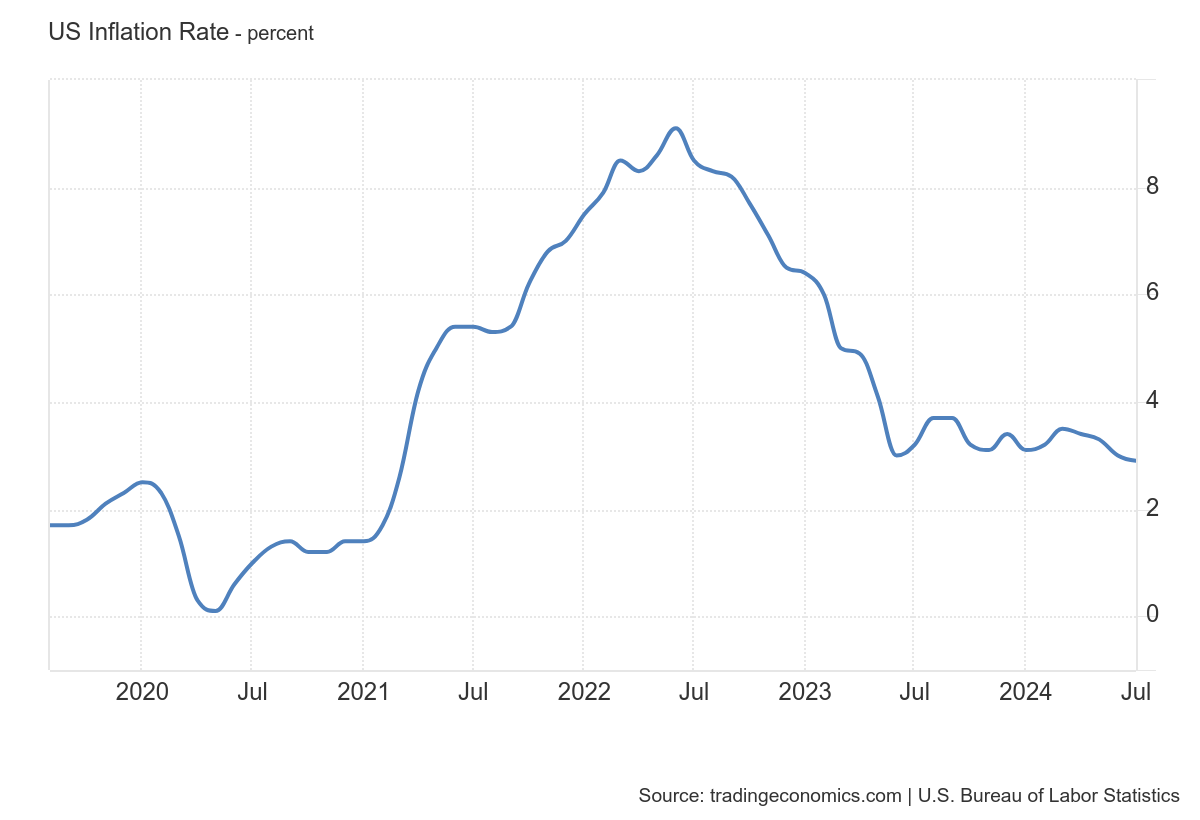
Over recent years we have seen CPI inflation rise from modest levels1.4% in 2020, by dizzying7% in 2021, up to a record 9.1% in 2022 in the United States.
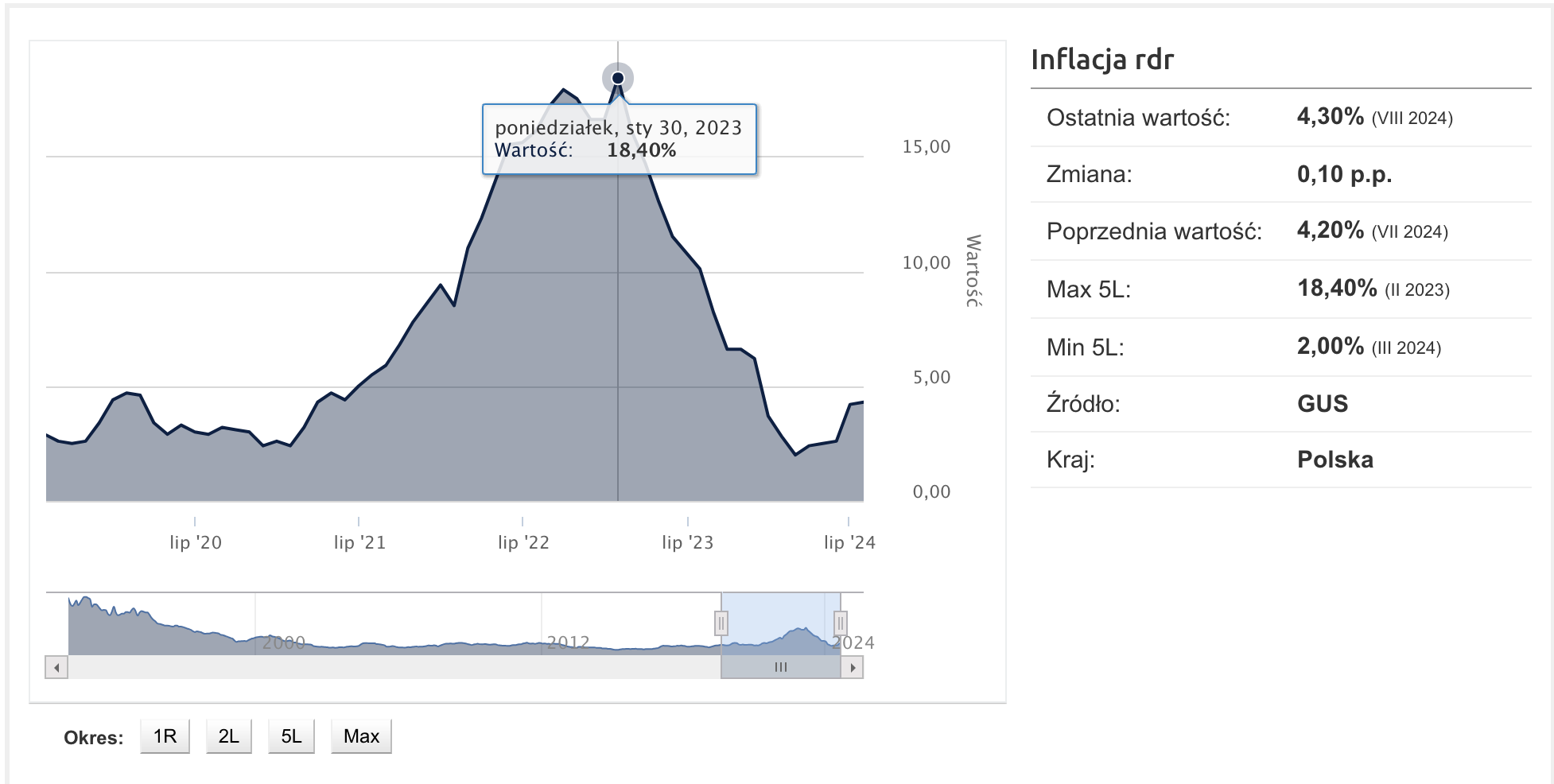
In Poland, the inflation situation was much more dramatic. According to data from the Central Statistical Office, CPI inflation in Poland increased from 3.4% in 2020 to 5.1% in 2021, and then jumped sharply to 14.4% in 2022,up to a record 18.4% in February 2023. This spike in inflation has had a significant impact on Poland’s IT sector, increasing pressure on technology companies’ wages and operating costs while reducing consumer purchasing power and corporate investment budgets.
What does this mean for the IT sector? On the one hand, technology companies must face rising operating costs – from salaries, subscription prices, energy and office space. On the other hand, the pressure to maintain competitive prices in the face of shrinking consumer budgets creates a situation where even the most innovative products can become a luxury that few can afford.
This inflationary spiral is a real threat to the entire IT ecosystem, which for years has been fed with the vision of unlimited growth. Companies that yesterday were handing out stock options and providing employees with lunches and fruit Thursdays, today have to make painful cuts to stay afloat. I will present a detailed analysis of the scale of layoffs in the largest technology companies and data on cost reductions later in the article, where we will look at specific cases and numbers illustrating the scale of this phenomenon.
Interest Rates
For years, the IT sector basked in the luxury of almost free capital. It was a time when start-ups could burn millions of dollars in pursuit of „growth at all costs”, and investors were ready to finance even the most absurd ideas just to avoid missing the „next Uber” – apart from the fact that Uber itself, despite its enormous market value, showed an operating profit for the first time in its history only in the third quarter of 2023,after 14 years of operationandcumulative losses exceeding USD 30 billion.The company announced a net profit of $221 million, a significant contrast to a loss of $2.6 billion in the same period a year earlier.2
We felt this strongly ourselves as owners of a software house and design studio. In 2021 and 2022, we enjoyed record growth thanks to the huge number of startups. We are currently still growing, although at a slightly slower pace. We have also noticed a change in our clientele – from creative but risky startup projects to mature businesses with solid business plans.
The Potato Parcel project – a start-up sending messages written on potatoes – well illustrates how hot the market is. Although it might seem like just a joke, this company actually attracted the attention and capital of investors.Potato Parcel3she even appeared on „Shark Tank”, where Kevin O’Leary invested $50,000 in the company for 10% of the shares. The company achieved impressive financial results,earning over $200,000 in the first two yearstheir business and generating profits reaching millions of dollars in the following years.

However, the increase in interest rates brutally ended this phase of euphoria. Capital has its price again, and investors – instead of looking for another potato phenomenon – pay more attention to the fundamentals, business model and predictability of profits. For many companies, including ours, this means the need for greater selectivity and concentration on projects that have real long-term potential, not just media publicity.
The end of cheap money
Due to mounting inflation pressures and the need to cool an overheated economy, the Federal Open Market Committee (FOMC) in the US raised interest rates from almost zero (0.25%) in March 2022 to a staggering5.50% on June 27, 2023.4. I am writing about the US market because it is the main technological hub that later influences other markets. Due to mounting inflation pressures and the need to cool the overheated economy, the Federal Open Market Committee (FOMC) in the US raised interest rates from almost zero (0.25%) in March 2022 to a staggering 5.50% on June 27, 2023. I am writing about the US market because like it or not, it is a major technology hub that later influences other markets. For example, in Poland, among others As a result of the FOMC’s actions, the National Bank of Poland (NBP) was also forced to raise interest rates from 0.1% to 6.75% to control inflation and stabilize the zloty exchange rate against the dollar.5
For the IT sector, the consequences are multiple and brutal. First, the cost of capital has increased dramatically. Technology companies, especially young and fast-growing ones, suddenly discovered that borrowing money is no longer as easy and cheap as it used to be.
Second, higher interest rates have led to a drastic change in the valuations of technology companies. Companies whose value was mainly based onon promises of future profits, suddenly discovered that the future is no longer as valuable as it once was.
Snowflake
Let’s look atSnowflake, a cloud data analytics platform. In 2020, at the height of technological euphoria, the company debuted on the stock exchange with a valuation reaching an astronomical $70 billion (this is approximately the GDP of Slovenia according to data from 2023!6). And all this with annual revenues barely exceeding $1 billion.

Higher interest rates have brutally verified this optimistic math. Snowflake’s value has dropped by nearly 60%.
Zoom
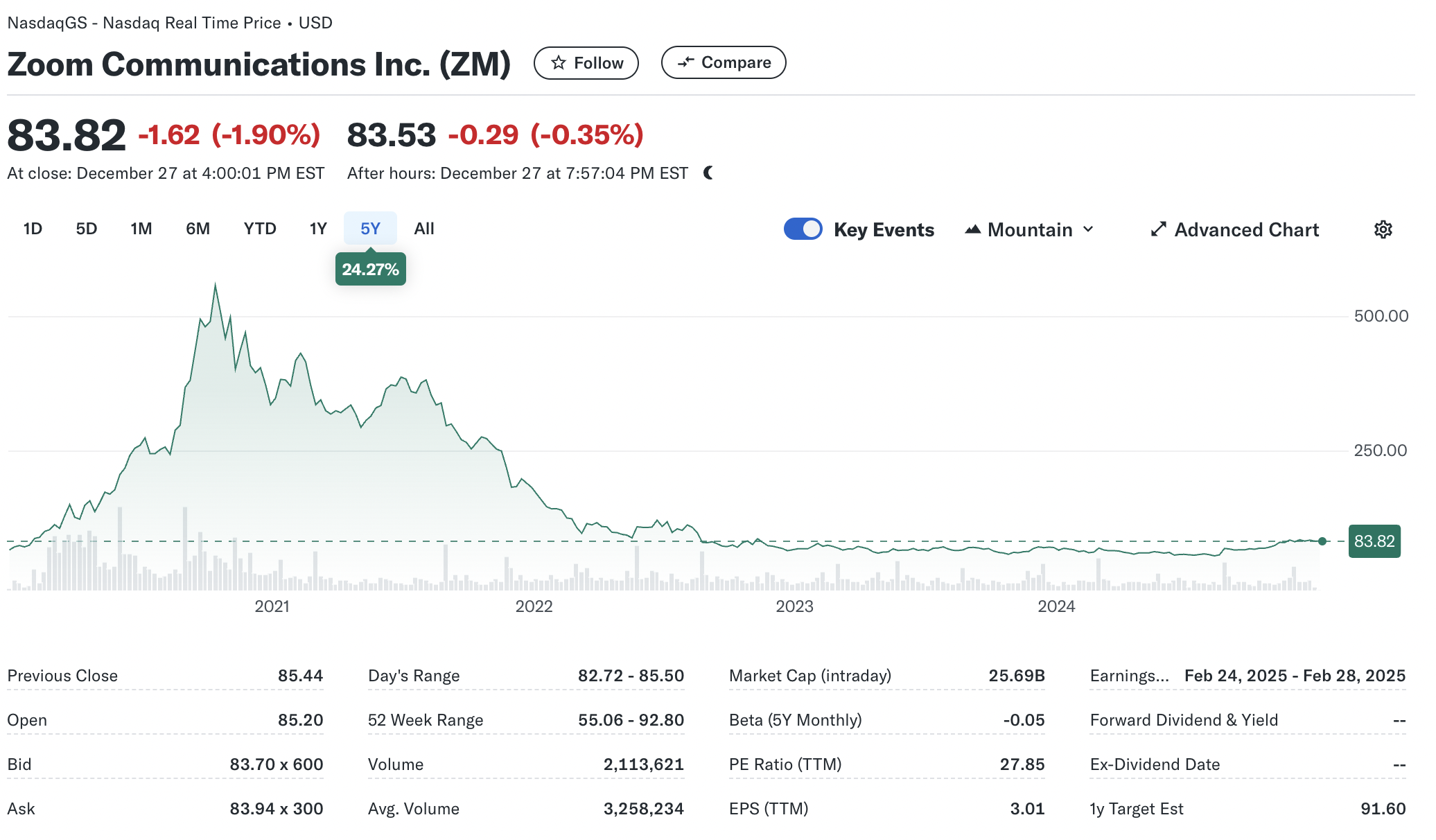
Let’s take as another exampleZoom, a symbol of the pandemic tech boom. At its peak in 2020, the company was valued at over$160 billion(About Kuwait’s GDP). Investors have concluded that the world will forever switch to videoconferencing, and offices will become a relic of the past, like floppy disks or landline phones. Today? Zoom is worth less than a third of that amount. The drop in Zoom’s valuation is as big as the futuristic, advanced city from „The Jetsons” turns into the post-apocalyptic landscape from „Mad Max” – a shocking but instructive transformation.
BeyondMeat
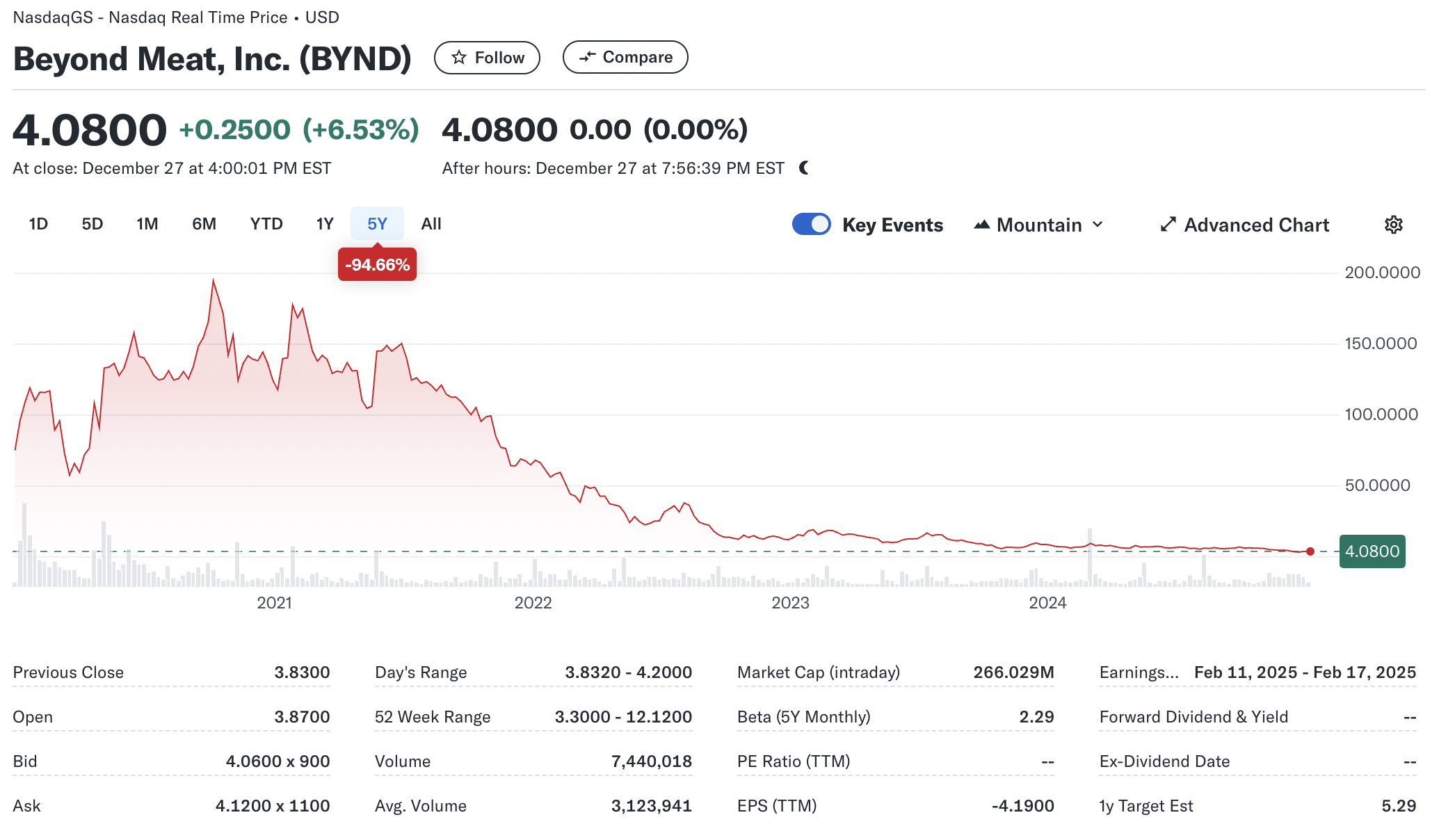
What aboutBeyond Meata company that was supposed to turn us all into vegetarians while saving the planet? In 2019, investors valued it at over $10 billion, as if artificial meat were to become the new gold. Today? Worth less than a billion.
I could find many more such examples, and they are not just dry statistics or abstract numbers. These are real stories of companies that believed (and convinced others) that the future is not only bright, but also immediate. In a world of low interest rates,this belief in the distant future was simply cheap. But when the cost of money increased, it suddenly turned out that the king was naked and the future was not as close and certain as it seemed.
Finally, the change in interest rates has caused a shift in investor preferences. Suddenly, safe bonds and bank deposits became an attractive alternative to risky technology investments. It’s like watching the exodus from the casino – as people discover they can make money without losing their shirts.
Currency Rate Fluctuations: Global Roulette
Last but not least, the most important piece of our macroeconomic puzzle is currency fluctuations. The value of the US Dollar Index (DXY) at the beginning of October 2024 is 100.308, which means that the index has decreased by 5.57% over the past 12 months.
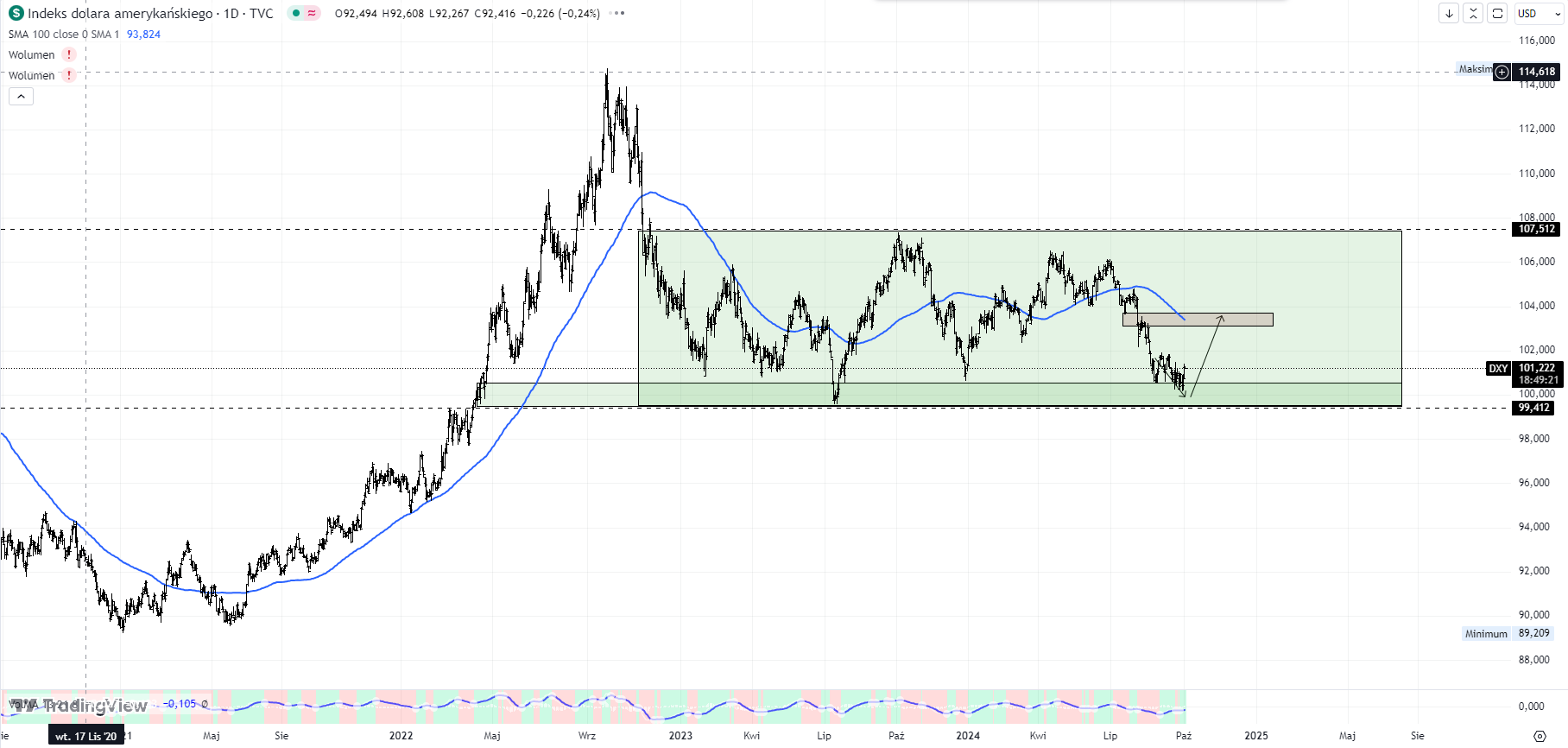
Imagine a technology company headquartered in Silicon Valley that generates a significant portion of its revenues in Europe or Asia. The rise in the value of the dollar means that their foreign earnings suddenly become less valuable when converted to USD. If, for example, we have a savings account in USD and earn money in another currency, we will of course feel it more or less depending on the amount, but in the case of large technology companies it is often like discovering that half of your life savings have been exchanged for monopoly money – nominally you have the same amount, but in reality you are much poorer.
At the same time, companies with development centers in countries with weaker currencies may experience unexpected savings on payroll costs. It’s like finding yourself in a situation where your employees suddenly become „cheaper”, but at the same time their purchasing power drops dramatically. It’s an ethical and operational nightmare that can lead to talent loss and productivity loss.
This situation is particularly visible in Poland. The weakening zloty against the dollar means that technology companies and shared services centers that have foreign investorscan enjoy lower operating costs in the short term. However, these same companies are faced with difficult decisions regarding pay increases for their employees, who are feeling the effects of inflation and the decline in the value of their currency.
For example, an IT employee in Poland, who previously earned PLN 10,000 a month to simplify the calculation, could buy much more goods and services with this money. Now, even though his nominal salary has remained unchanged, price increases and the reduced value of the zloty against the dollar mean that he earns less in real terms. To better understand what this looked like in different years, let’s look at specific data.
In 2021, with an average annual inflation of 5.17%, the real value of his remuneration dropped to approximately PLN 9,506. Converted into dollars, taking into account the average exchange rate of PLN 3.92/USD, his salary was approximately USD 2,431 per month.
Year 2022was even worse from the point of view of inflation, which averaged 14.34%. The real value of his monthly salary dropped even further, to approximately PLN 8,746. At the same time, the dollar exchange rate rose to PLN 4.43/USD, which meant that, when converted into USD, his salary was only about USD 1,976 per month.
In 2023year, inflation in Poland, although slightly lower than in 2022, was still high, amounting to an average of 11.69%. This meant that the real value of his remuneration was approximately PLN 8,953. With the dollar exchange rate at PLN 4.40/USD, his salary in dollar terms was approximately USD 2,036 per month.
Moreover, increased volatility in currency markets forces IT companies to use more advanced (and expensive) currency risk management strategies. It’s like trying to predict the weather a year in advance – you can invest in the best models and data, but there is always a risk of being caught off guard by an unexpected financial hurricane.
Geopolitics and the IT sector: The new technological cold war
In the face of conflicts abroad, Poland has become home to many new experts on war and geopolitics. So I’m not going to go into these topics in too much detail because I’m not a specialist in this field. I just want to point out some technological movements and their implications. At a time when data has become the new currency of power, geopolitics has entered the world of technology with great force. We are seeing the birth of a new Cold War, this time fought not with weapons of mass destruction, but with lines of code and processors. The United States and China, like two giants, are clashing on the digital chessboard, where every move has serious consequences for the global IT sector.
Taiwan, especially the companyTSMC(Taiwan Semiconductor Manufacturing Company), plays a key role in this technological competition. Its importance in microprocessor manufacturing around the world makes it a strategic point in the global technology supply chain. Many US and European technology companies such asAppleWhetherNVIDIA, depends on TSMC for the production of its chips. Any disruptions in Taiwan, especially in the context of a potential conflict with China, could have disastrous consequences for the global IT market.
The COVID-19 pandemic has further exposed vulnerabilities in global supply chains, especially in the automotive industry, where the microprocessor crisis has significantly limited the production of new cars. Such market turmoil led to delays in deliveries of new cars, price increases and increased demand on the secondary market.7
In response to these threats, the U.S. and EU governments are investing in local semiconductor factories to reduce dependence on Taiwan. Geopolitical pressures force countries to protect national interests in the area of new technologies. An example is Huawei, the Chinese telecommunications giant, which has become a symbol of this fragmentation after being excluded from Western 5G markets due to concerns about national security.
Against the background of these global fluctuations and turmoil, decisions such as the cancellation of Intel’s investment in Poland further complicate the situation. Intel recently announced that it will not implement the planned investment in Miękinia near Wrocław, which sparked conversations about the reasons for this decision. Cancellation of this investment,which was supposed to be the largest foreign direct investment in Poland, indicates the uncertainty associated with the implementation of technological projects nowadaysgeopolitical instabilityandgrowing competition in the semiconductor market.The main reasons for this decision include changes in Intel’s investment strategy, cost increases, geopolitical tensions and the crisis in semiconductor supply chains, exacerbated by the pandemic.8
Intel’s financial problems are also global – the decline in share values, suspension of the dividend and layoffs are symptoms of a larger reorganization that also affects investments in Europe, such as in Magdeburg, Germany, which have also been postponed to a later date.
Emphasis on the protection of personal data, intellectual property rights and antitrust policy in the European Union
The European Union stands out internationally not only for its approach to personal data protection (GDPR), but also for its comprehensive approach to regulating the digital economy. Unlike the more liberal approach of the United States or China, the EU is actively shaping the legal framework for digital technologies. In terms of antitrust, the EU has adopted groundbreaking regulations –Digital Markets Act (DMA)andDigital Services Act (DSA).9
These legal acts aim to end the dominance of the largest technology companies, often called „gatekeepers”. These companies must meet a number of additional requirements, and violating them may result in severe financial penalties, up to10% of annual global turnover.
In the area of cryptocurrencies, the EU is introducing comprehensive regulations through a regulationMiCA (Markets in Crypto-Assets). This is the first such extensive regulation of the crypto-asset market in the world. It sets clear rules for cryptocurrency service providers, requires appropriate licenses and introduces consumer protection mechanisms. Particular emphasis was placed on counteracting money laundering and market manipulation.10
When it comes to responsibility for content published online,DSAintroduces new standards for content moderation. Online platforms must respond quickly to reports of illegal content, and users must have access to redress mechanisms. Larger platforms have additional transparency obligations and must conduct risk assessments on a regular basis.11
All these regulations create a coherent legal ecosystem that aims to protect the rights of EU citizens in the digital world, ensure fair competition and prevent abuse.
This is a significantly different approach to that used in other parts of the world, where regulations are often more fragmented or less restrictive. It is worth noting that these regulations have a direct impact on the way technology companies must design and deploy their services in the EU, often forcing significant changes to their business models and operating practices.
LinkedIn example
One recent example of this protectionist approach to AI technology was the situation with Microsoft’s LinkedIn platform. In the United States, LinkedIn has made it a default for users to consent to the use of their data in training AI algorithms, which may have been met with criticism in Europe due to GDPR restrictions.
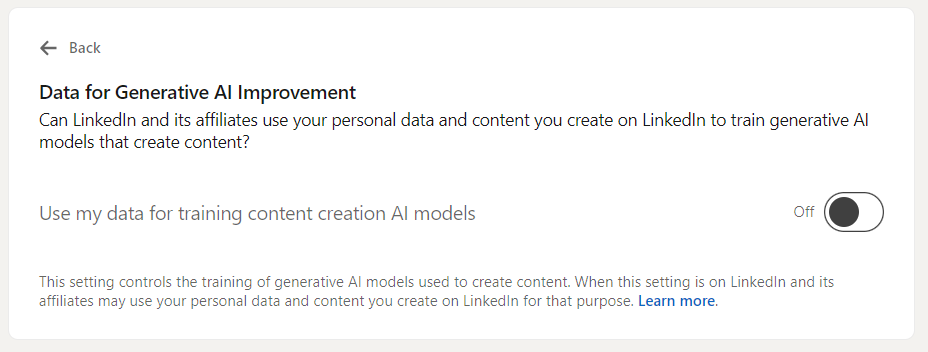
Such practices are the subject of intense discussion in the EU, which aims to strike a balance between protecting citizens’ privacy and developing innovations in the field of artificial intelligence. While the US and China are dynamically developing AI technologies, often based on wide access to data, the European Union must find its own path that will protect citizens and at the same time support technological development.
Another example – the GAIA-x project
The European Union, feeling squeezed between the American hammer and the Chinese anvil, launched the projectGAIA-X12– European response to the domination of foreign clouds. It is an initiative aimed at creating an independent European cloud ecosystem as a response to the dominance of global giants such as Amazon Web Services (AWS) and Microsoft Azure. Both of these companies control a significant portion of the global cloud market, with an average share of 32% for AWS and 23% for Azure. Chinese leaders such as Alibaba Cloud also have significant share, especially in Asia.

GAIA-X aims to address Europe’s need for greater digital sovereignty by offering a platform that supports European data protection and privacy standards. With increasing data localization regulations requiring information to be stored in specific locations, IT companies need to invest in the right infrastructure. Design GAIA-X offers jointly developed standards and supports the development of local data centers compliant with EU requirements.
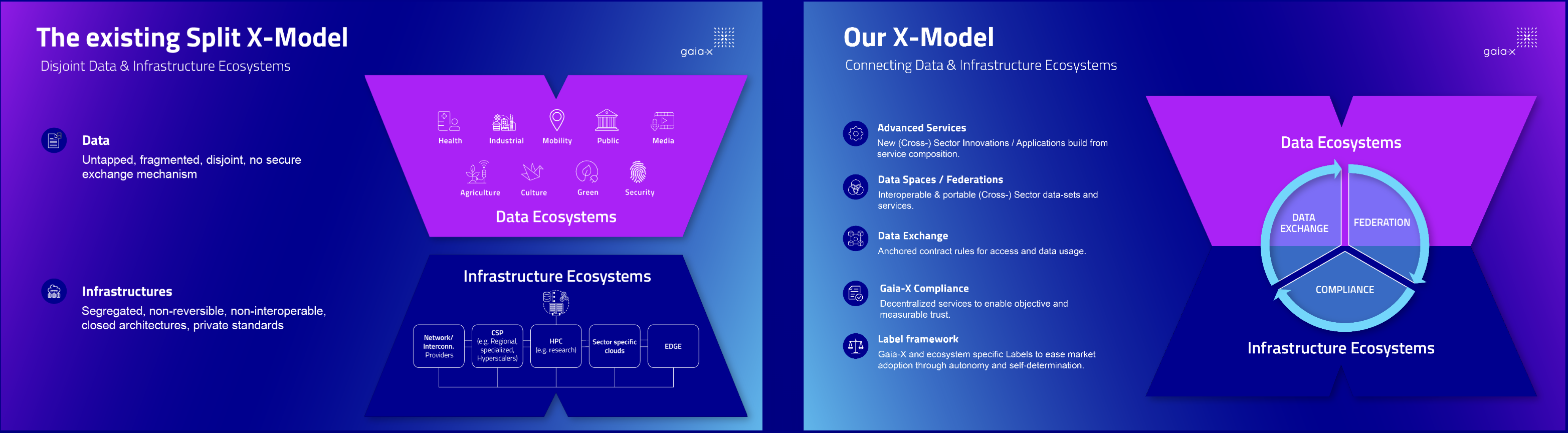
Such activities are crucial in the context of global technological standards and geopolitical tensions, such as initiatives such as „China Standards 2035” that explore new rules in the world of digital domination. That’s why GAIA-X aims to give Europe greater control and security in the dynamically evolving cloud technology environment.
In the next paragraph, we will look at business cycles that have a significant impact on the development of technology sectors and the global economy. Understanding these cycles will help identify opportunities and threats for the continued evolution of both local and international technology initiatives.
Economic Cycles
The position of the IT industry in the current economic cycle
As I mentioned earlier, I am not a professional economist, but only an enthusiast who, in order to better understand and manage his own budget and company, delves into financial analyses, industry reports and various publications on this subject. Therefore, I encourage you to share your thoughts in the comments, especially if you think that my simplifications or approach are too naive or incomplete. Every constructive comment is valuable to me and helps expand my knowledge. This caveat is particularly important in the context of the next part of the article, where we will delve into more complex issues of business and economic cycles, which even among professional economists are the subject of heated debates and different interpretations.
Let’s imagine for a moment that the economy is a gigantic flywheel and the IT industry is one of its key elements. This wheel has been turning at breakneck speed for the past decade, driven almost entirely by the technology sector. But now? Now we watch this mighty wheel slow down, creaking and groaning under the weight of its own momentum.
The IT sector is currently in a sobering phase, as there have been many developments in recent years. I used to say that the situation of recent years is an anomaly that must end someday.
Let’s look at the facts
NASDAQ Index
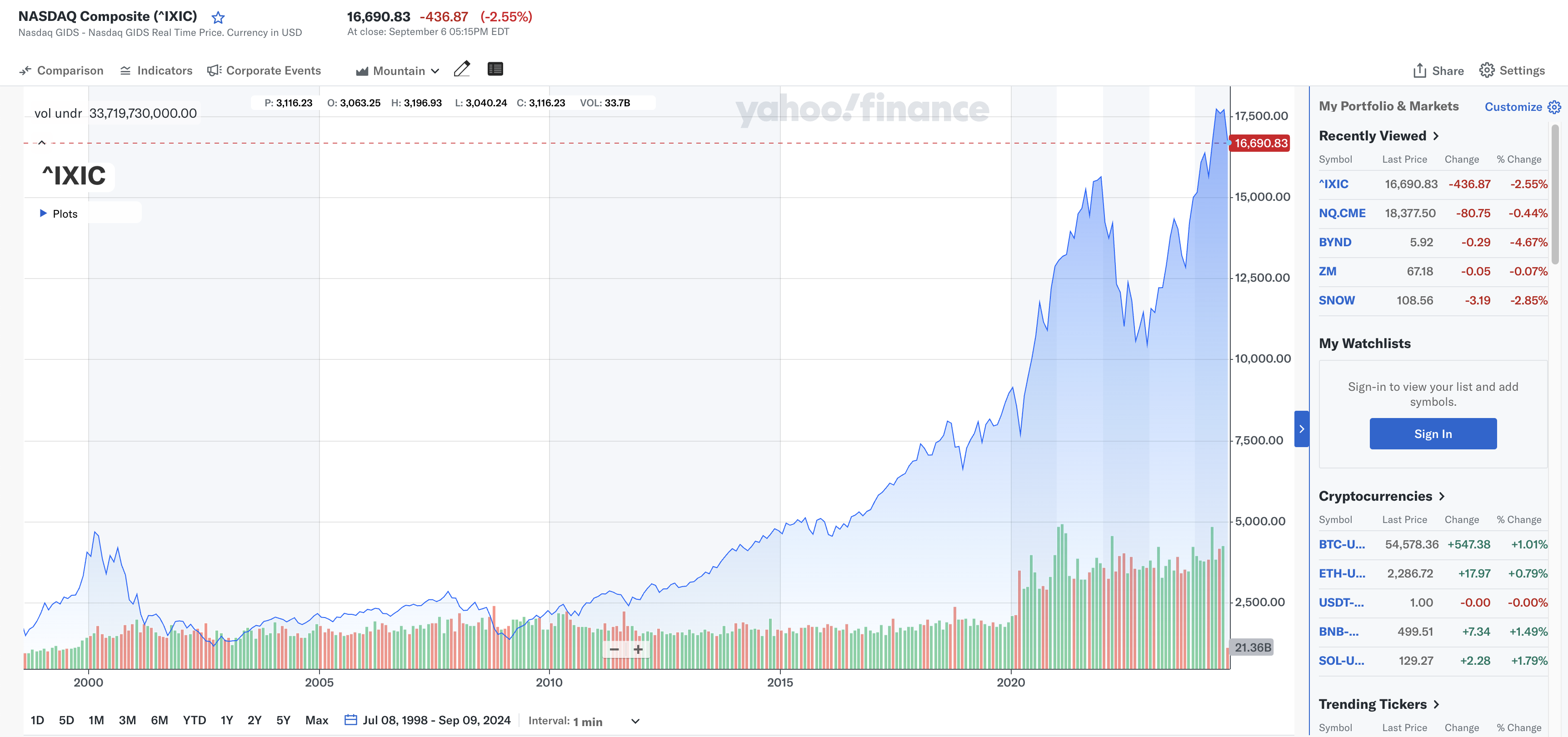
Between 2022 and 2024, the valuations of technology companies, and especially the NASDAQ index, experienced significant fluctuations. In 2022, the index ended the year at 10,466.48 points, which meant a decline of 33.10% compared to the previous year. High inflation and rising interest rates had a significant impact on these results, leading to a massive sell-off in technology stocks. However, in 2023, the situation began to improve. The NASDAQ index rose to 15,011.35 points, an impressive increase of 43.42%.13
The recovery in the technology sector was driven by increased investment in artificial intelligence and health technologies, which have become increasingly important in the face of changing market needs. In 2024, at the beginning of October, the index value reached17,910.36 points, which meant a further increase of 19.31% compared to the previous year. This positive trend was supported by the further development of AI technology and the stabilization of markets after previous turbulence. It is worth noting that the key factors influencing these changes were inflation and interest rates.
High inflation rates and rising interest rates in 2022 have had a negative impact on stock valuations, leading to their declines. After the peak of the COVID-19 pandemic, many technology companies adjusted their strategies, which contributed to an increase in investment in innovation. The technology sector is showing signs of recovery, but there are still concerns about inflation and the overall economic situation that could impact future market performance. Over these three years, the market has gone through turbulent times, but also demonstrated its ability to adapt and grow in the face of challenges.
Venture Capital Investments
Venture capital investment in 2023 experienced a significant decline, with global value standing at around $315 billion. In the United States, investment reached its lowest level since 2017 at $248.4 billion, which also marked a 30 percent decline in transaction volume. Despite the overall trend, sectors such as artificial intelligence and health technology were among the few areas that attracted significant funding.14
In the fourth quarter of 2023, VC investment reached its lowest level for the year, although interest in AI and clean energy technologies was still visible. Forecasts for 2024 suggest a moderate increase in VC financing by 5%, with hopes for market stabilization. Sectors such as AI, health and financial services are expected to play a key role in driving this positive trend.15
Mass Layoffs
Mass layoffs in technology companies have become commonplace. Meta, Amazon, Microsoft, Google – giants that seemed indestructible suddenly began to reduce employment in response to changing market conditions and strategic needs. In 2023, the technology industry experienced a total of over 260,000 layoffs, a significant increase compared to previous years.
Google laid off approximately 12,000 employees, which was 6% of its total workforce. Amazon announced cuts of 18,000 positions and Meta reduced its workforce by approximately 21,000 people from November 2022 to early 2024. Microsoft carried out layoffs related to the restructuring of Activision Blizzard and Xbox, affecting 1,900 employees.16
These cuts result not only from restructuring needs and changes in business strategies, but also from the growing impact of automation and artificial intelligence, which are changing the demand for specific positions. Massive layoffs continued in 2024, especially in January, when Amazon and Google announced job cuts again. Another example is Unity, which announced layoffs for 1,800 employees, which represented 25% of the total workforce.
What does all this mean? We are witnessing the endexpansion phasesand we entercontraction phase.
Comparison with previous crises
To understand the current situation, it is worth looking back. History, as they say, does not repeat itself, but it often rhymes. And this rhyme sounds especially familiar now.
Dot-com bubble (1995-2001)
The dot-com bubble era, which lasted from 1995 to 2001, was a time of unbridled investment enthusiasm in which adding ’.com’ to a company’s name could instantly double its value. Many startups that had no revenue and often no finished products were valued at billions of dollars. Market values rose at an alarming rate, with the NASDAQ rising from around 1,000 points in 1995 to a record high of 5,048.62 points in March 2000, before plummeting to around 1,840 points in 2001 after the bubble burst.17
| Similarities | Differences |
|---|---|
| Excessive valuations: Both during the dot-com bubble and today, many technology companies are valued based on promises of future earnings rather than current financial performance. In both cases, investors are often guided by emotions and speculations. | Real revenues: Unlike the 1990s, today’s technology companies often have stable revenues and profits. The technology sector is much more developed and mature than back then. |
| Speculative investments: In both periods, we see an increase in interest in startups without solid business models. In the 1990s, investors invested massively in dot-coms, hoping for quick profits. Today, many technology companies are also attracting capital without proven paths to profitability. | The role of technology: Technology has become an integral part of the economy, not just a fashion accessory. The Internet was a luxury in the 1990s; today it is an essential infrastructure for many industries. |
| The belief that „this time is different”: Many investors believed that the dot-com bubble was a one-time event and that the current technology market is more stable and resistant tocrises in IT. However, history shows that such beliefs can lead to similar investment mistakes | |
| Low rates and access to capital: The Internet bubble was also associated with low interest rates and easy access to capital, which encouraged speculation. As the market grew, so did accounting scandals involving the manipulation of financial results by some companies. |
Financial crisis 2008:
The 2008 financial crisis that rocked the global economy was a reminder of the recklessness of some financial institutions that acted like gamblers in Las Vegas. Although this crisis had its roots mainly in the financial sector, its effects also affected the technology sector, which at the time was seen as a way to increase efficiency in difficult times.
| Similarities | Differences |
|---|---|
| Access to capital:The 2008 crisis caused significantlimiting access to capital,which forced many companies to restructure. Today the situation is similar; many startups and technology companies have difficulty obtaining financing. | Sector at the epicenter of the storm:In 2008, the crisis was mainly concentrated in the financial sector. Today, the technology sector is at the center of the storm, with many well-known companies struggling with excessive costs and efficiency issues. |
| Technology perception:In 2008, technology was seen as a key element in increasing efficiency in difficult times. Today, however, technology itself is often considered a source of inefficiency and excess costs, which is changing the way companies approach investment in new solutions. |
Dance of Business Cycles
And now, dear readers, let us rise to the heights of economic abstraction and look at the current situation through the prism of business cycles. However, it should be remembered that recession and expansion cannot be predicted, and by economists such asPaul KrugmanandNouriel Roubini, this is charlatanism. Business cycles can be useful as a tool for visualizing where a company is at any given time. They help understand general trends in the economy and predict potential changes in the market environment.
Thanks to this, managers can better adapt their strategies to current conditions. For example, in the growth phase, companies can invest in development, while in the recession phase it is worth focusing on cost optimization.
However,these analyzes should be approached with caution. There are only business cyclesmodels (!), which do not take into account all the variables affecting the economy. Modern markets are complex and susceptible to various external factors, such as politics, technological innovations and global crises. It is worth treating business cycles as one of the tools in the analytical arsenal, but not as the only truth. It is crucial to remain flexible and open to new information and changing market conditions. For people who don’t like numbers and analyzes – you can skip this section.
Let’s start with that mammoth among economic cycles, which is the Kondratiev cycle. Kondratiev is often compared to the seasons of the economy – each lasts a long time, but inevitably flows into the next.
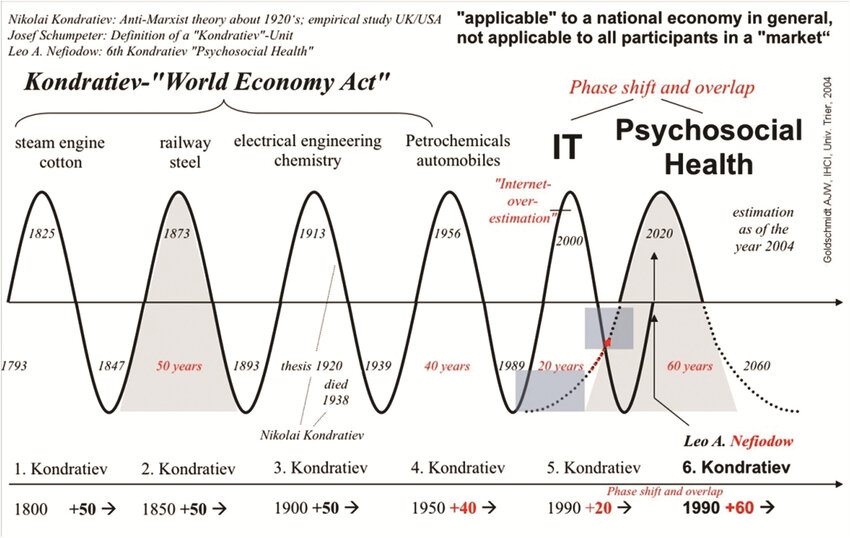
The Kondratiev cycle, although long-lasting, is just one of many forces shaping our economy. The changes we observe are the result of many factors acting simultaneously. It is also worth paying attention to the smaller gears of our economical clock, such asJuglar cyclesWhetherKitchin cycles, which last shorter and influence changes in the economy that are more visible on a daily basis.
Smaller cycles such asJuglar cycle, lasting approximately 7-11 years, are related to investments in equipment and fixed assets. This cycle is more tangible in the day-to-day running of a business, influencing decisions about capital and resources.
It is even shorterKitchin cycle, lasting about 3-5 years, mainly related to inventories and their management. This cycle can be identified with more immediate fluctuations in supply and demand.
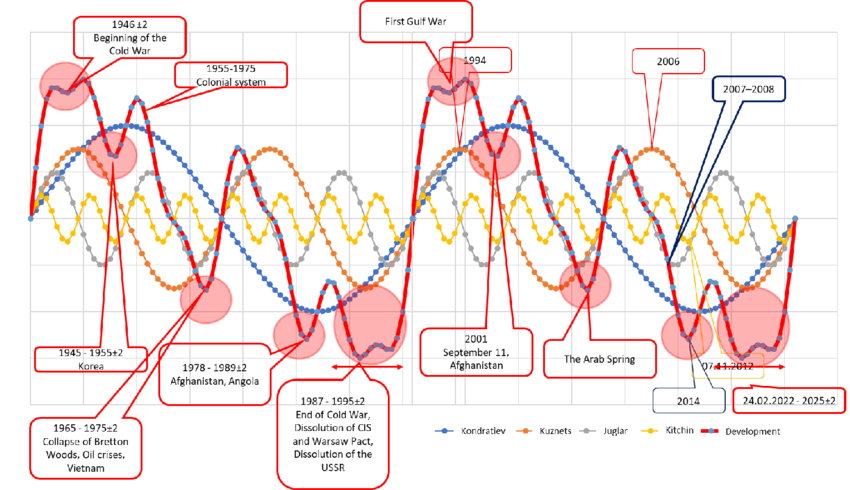
https://www.researchgate.net/figure/Distribution-of-the-last-two-integral-development-curves-and-the-main-crises-in-their_fig3_372287971
Together, these different cycles create a complex web of interdependencies that influence how the economy develops. It is important to understand that whilethe Kondratiev cycle may suggest broader, long-term trends, thesesmaller cycles may provide more direct cluesregarding short-term economic fluctuations.
Looking holistically, we also need to take into account phenomena such as:globalization,demographic changes, technological progress, and alsounpredictable geopolitical factors, which may influence the course and dynamics of these cycles. This will give us a better understanding of how to prepare for upcoming changes and what strategies to adopt to make the most of current and future economic conditions.
What phase of the cycle are we in?
We are currently in an interesting economic moment, which can be described as a transition period from debt expansion to a phase of slowdown or early recession. Why? One of the important signals was the inverted yield curve on treasury bonds that would persist for most of 2023, which historically often preceded periods of economic slowdown. Although this curve has now normalized, other macroeconomic indicators, such as persistently elevated inflation despite restrictive monetary policy, rising public debt servicing costs and tensions in the labor market, suggest the possibility of an upcoming economic slowdown.
After more than a decade of economic recovery following the 2008 financial crisis, many indicators suggest that the global economy is beginning to slow. This period of expansion, fueled by low interest rates and the generosity of monetary policy, has produced significant growth, particularly in the technology sector. However, this long-term increase could not continue indefinitely without corrections.
Additionally, the economic slowdown is compounded by geopolitical turmoil, including trade wars and U.S.-China frictions, which further impact global supply chains and create uncertainty in international investments. The introduction of new data protection rules and regulations, such as those related to GDPR, also add to the overall complexity of the market situation, forcing companies to adapt to new requirements.
While data and forecasts for 2025 and beyond show some signs of stabilization, the picture is not clear. According to the reportPitchBook-NVCA Venture Monitor,18VC financing is expected to grow moderately by approximately 5% globally, with the main areas of investor interest being AI technologies (especially generative AI) and innovations in the healthcare sector. CB Insights predicts that global investment in AI could exceed $200 billion by 2025, driven by growing demand for automation and personalization of services.
However, overall economic uncertainty remains a high risk. In its „Tech Trends 2025” report, Deloitte points to a number of challenges facing the technology sector, including rising operating costs, pressure on margins and the need to adapt to new regulations regarding AI and data privacy. McKinsey & Company emphasizes that the market is facing the challenge of adapting to new conditions, which may lead to further structural changes and require greater flexibility on the part of companies, especially in the area of talent management and cost optimization.
In the context of economic cycles, you can seesymptoms of the late stages of the Kondratiev cycle, with a potential shift towards new technologies and social changes that could set the next long-term growth pattern. characterized by a slowdown in investment and market consolidation, setting the stage for the next wave of innovation.
At the same time, we can observetransitional stages of the Kuznetsh cycle, related to infrastructure and demographic investments. After an intense period of digital infrastructure expansion and urbanization, economies are starting to take offadapt and consolidate the achievements achieved.
In the short run,the Juglar cycle suggests that we are in a slowdown phase. Mass layoffs in large technology companies and declines in venture capital investments observed this year indicate a period of reflux after intensive development and investments in fixed capital.
Additionally, the Kitchin cycle of inventory management indicates that companies can now adapt their operational strategies to better respond to changing market conditions andGreater caution is expected in stocks and investments.
Overall, the current overlap of these cycles is leading to a period of adjustment in which economies and sectors, including technology, are rethinking their strategies to adapt to new market conditions. How these cycles develop in the future will depend on many factors, including technological advances, global tensions and changing consumer needs.
IT market structure: What does the current market and demand look like?
The technology sector, long seen as a bastion of constant growth and innovation, is currently undergoing a profound transformation. Changes in the structure of demand, saturation of certain market segments and the evolution of business models create a new landscape in which companies must learn to navigate.
Increasing demand for selected IT services and products
Recent years have brought significant shifts in the expectations of customers – both individual and corporate – towards technology.Cloud computinghas become the dominant trend, with global spending on public cloud services rising from $196 billion in 2018 to an estimated $494 billion in 2022, according to Gartner. This impressive growth of 152% in just four years reflects a fundamental shift in the approach to IT infrastructure. Companies are increasingly moving away from maintaining their own data centers in favor of flexible, scalable cloud solutions.
In parallel,cybersecurityIt has ceased to be an optional extra and has become a critical element of every IT strategy. In an era of digital transformation and growing online threats, IDC forecasts that global cybersecurity spending will reach $174.7 billion in 2024. This growth is driven not only by the increasing number of cyberattacks, but also by increasingly stringent data protection regulations.
Artificial intelligenceandmachine learning, once the domain of academic laboratories, have moved into the business mainstream. McKinsey estimates that AI could add $13 trillion to the global economy by 2030. Companies are investing in these technologies not only to automate processes, but also to look for new sources of competitive advantage, from personalizing customer experiences to optimizing supply chains.
Market saturation in some segments
Mobile and web application market, once a symbol of limitless opportunities for developers, is showing clear signs of saturation and consolidation. According to the latest data.ai (formerly App Annie) report from 2023, global consumer spending on mobile applications has reached$167 billion in 2022, which represents an increase of 2% year on year. This is a significant slowdown compared to the 19% growth seen in 2021.
In the context of web applications, reportW3Techsfrom early 2024 indicates that 35.9% of all websites use WordPress, which represents 63.6% of the content management system (CMS) market share. This dominance of a single platform suggests that the website development market is also reaching a saturation point, with less and less room for new, innovative solutions.
The technology startup sector is also experiencing the effects of market saturation.Global startup funding dropped by 35%, as I mentioned in the first part of the article. Early-stage startups have been particularly hard hit, suggesting investors are becoming more selective and cautious in the face of market saturation.
In the sectorenterprise software, despite overall growth, some segments show signs of maturity. In its 2023 report, Gartner forecasts global spending on enterprise softwarewill grow by 12.3% in 2024, which is a slight decline from 13.5% growth in 2022. This slowdown indicates increasing market saturation and the need for innovation to maintain growth.
The market for dedicated software solutions is also experiencing changes. According to a 2023 report by Grand View Research, the global custom software development market was valued at $24.46 billion in 2022 and is expected to grow at a rateCAGR (Compound Annual Growth Rate) 7.2%od 2023 do 2030 roku. However,this growth is mainly driven by digital transformation in traditional sectors, while in technology industries there is a trend towards ready-made and configurable solutions.
This means that in the area of application development, Low-Code and No-Code platforms will become increasingly important, which may pose a threat to the traditional software development market. Gartner predictsthat by 2025, 70% of new applications developed by enterprises will use Low-Code or No-Code technologies, compared to less than 25% in 2020.
Bank of Americarecently announced (in 2024) that it is launching a mobile app for its millions of users, based on a low-code platform calledFlutterFlow. This tool allows you to create applications without the need for advanced programming knowledge, which is intended to speed up the software development process and increase efficiency in creating solutions for customers.
The cloud services market, while still growing, is also showing signs of maturing. Synergy Research Group reports that infrastructure and cloud spending reached $65 billion in the third quarter of 2023, up 17% year-over-year. However, this is a slowdown compared to the 30-40% increases observed in previous years.
In the artificial intelligence sector, despite enormous interest and investment, paradoxically there are also signs of saturation in some areas. Stanford University’s AI Index 2024 report indicates thatMrprivate investment in AI fell by 26% in 2022compared to the record year of 2021, reaching $91.9 billion.
Evolution and trends of business models in the IT industry
Dominance of the SaaS (Software as a Service) model
The SaaS model has strengthened its position as the dominant paradigm in software delivery. According to a 2023 Gartner report, global SaaS spending is expected to reach $195.2 billion in 2024, an increase of 17.9% from the previous year. Companies like Salesforce, Microsoft and Adobe are leaders in this transformation, withAdobe generating 94% of its revenue from subscriptions in 2023, compared to 78% in 2018.
BetterCloud’s 2023 State of SaaSOps reports that the average organization is now using 130 SaaS applications, an 18% increase from the previous year. Moreover, 70% of CIOs predict that more than 85% of their business applications will be SaaS by 2025.
Platforms and ecosystems
Technology giants are intensifying the development of comprehensive ecosystems combining various products and services. Amazon Web Services (AWS) not only provides cloud services, but also develops AI, IoT and data analytics tools. In 2023 AWS revenues increased by 12% year over year, reaching $80.1 billion.
Microsoft, with its ecosystem including Windows, Office 365, Azure and LinkedIn, reported revenues of $211.9 billion in 2023,of which 51% came from cloud services. This strategy not only increases customer loyalty, but also creates significant barriers to entry for competitors.
AI as a service (AIaaS) and monetization of AI models
Artificial intelligence is becoming a key element of the offer of many IT companies. According to a report by Grand View Research, the global AI-as-a-service market is expected to reach $77.04 billion by 2025, growing at a CAGR of 56.7% from 2019.
OpenAI, with its GPT-4 model, has revolutionized the approach to AI monetization by offering access to advanced language models via API. In the first quarter of 2023, the company achieved annual revenue of $1.6 billion, mainly due to its subscription model and partnership with Microsoft.
Models based on the API economy
The API economy is becoming an indispensable part of the IT landscape, and its growing importance is due to the noticeable benefits that companies gain from integrating programming interfaces. The 2023 RapidAPI report indicates that 68% of developers anticipate an increase in API use in 2024, and 94% of companies plan investments in this area over the next year.
The increased interest in APIs in the IT sector is visible in the success of companies such as Twilio and Stripe. Twilio, a leader in API-based communications as a service (CPaaS), reported revenues of $3.5 billion in 2022,which means an increase of 35% compared to the previous year. This result shows how APIs can revolutionize the way companies communicate with customers. Meanwhile, Stripe, an API-based online payment platform, was valued at $50 billion in 2023, becoming a key player in the world of online payments.
With the growing interest in artificial intelligence, AI APIs are playing an increasingly important role. Companies are integrating AI capabilities through services such as Google Cloud AI and AWS AI Services, which allows easier access to advanced AI technologies without the need to invest in expensive infrastructure. Such solutions allow for the automation of business processes, analysis of customer data and personalization of user experiences.
The lesson from this trend is that the API economy and integration with AI technologies will be key to the future development of the IT industry. Companies will need to invest in API development and implementation to remain competitive. AI APIs can contribute to innovation and improved operational efficiency, which is important in the face of changing market conditions. As the IT sector evolves, APIs and their integration with AI will be crucial.
Subscription models in the gaming and entertainment industry
The gaming industry is undergoing a transformation towards subscription models. Microsoft’s Xbox Game Pass reached 25 million subscribers in 2023, generating estimated revenue of $4 billion annually. Sony’s PlayStation Plus, rebranded in 2022, had amassed over 47.4 million subscribers by the end of 2023.
Edge Computing and Hybrid Models
With the development of the Internet of Things (IoT) and the need for real-time data processing,Edge Computing(a data processing model in which computations take place closer to where they are created or used, instead of in a central data center) is gaining importance. IDC forecasts that global spending on edge computing will reach $274 billion by 2025, growing at a rateCAGR 18.7%.
Companies such as Dell Technologies and HPE are developing offers combining cloud solutions with Edge Computing, offering customers flexible, hybrid IT infrastructure models.
Open source based models
Open source is becoming an increasingly important element of the business strategies of IT companies.Red Hat, acquired by IBM for $34 billion in 2019, reported revenue of $4.5 billion in 2022, offering support and services around open source software.
GitLab, an open-source DevOps platform, achieved revenue of $424.3 million in fiscal 2023, up 69% year-over-year.
IT labor market: Transformation in the face of challenges
The impact on the labor market is both complex and multi-layered. Technological changes, economic pressure and evolution of business needs are key factors shaping the new employment landscape in this industry – especially the number of mass layoffs mentioned in the first part of the article.
General employment trends in the sector
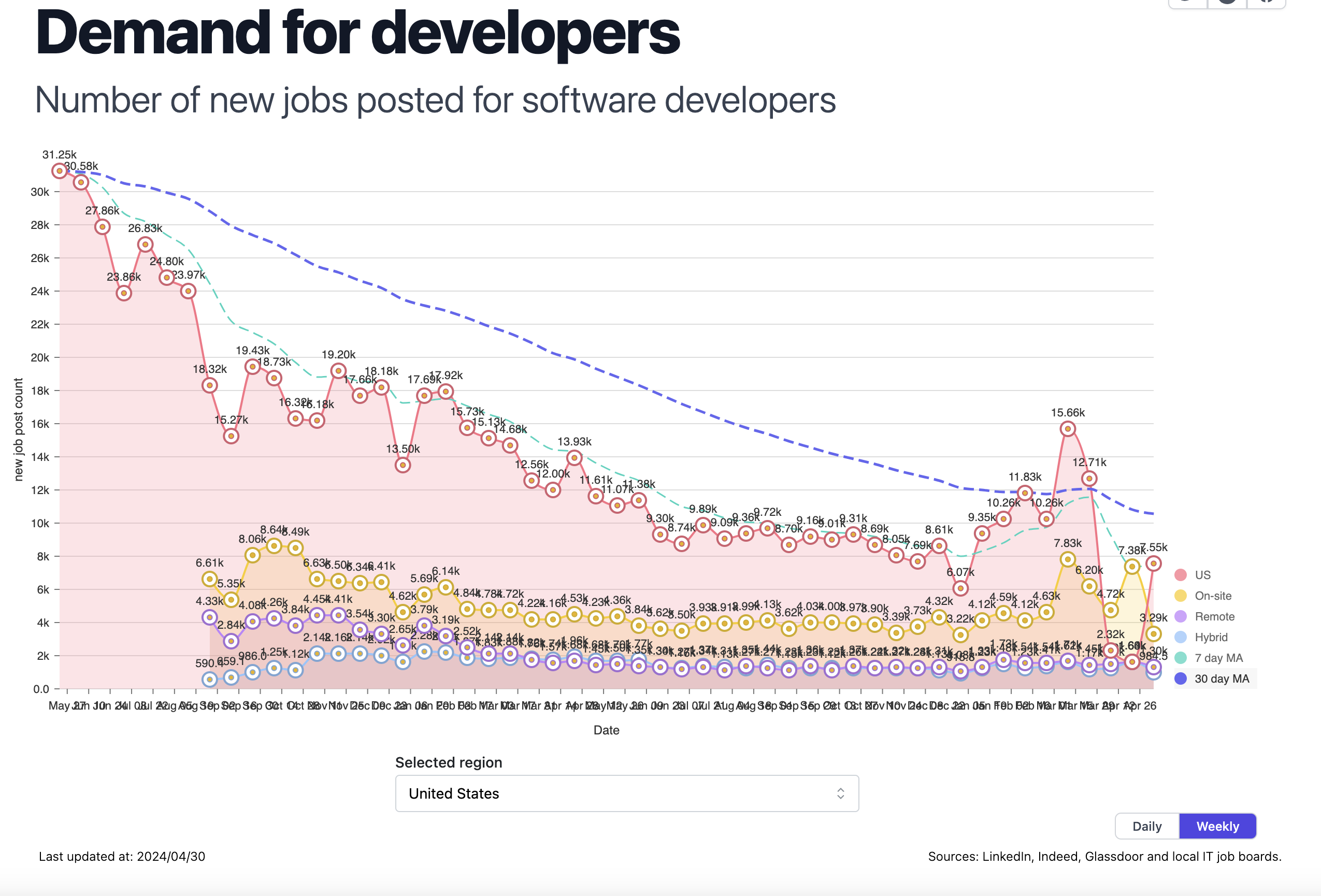
Global IT employment exhibits complex dynamics. According to CompTIA’s „State of the Tech Workforce” report, the number of workers in the sector increased from 62.7 million in 2021 to 65.3 million in 2023, with a further increase forecast to approximately 67 million in 2024. However,growth rate slowed from 4.2% in 2022 to 2.7% in 2023, which signals some cooling in the labor market.
Paradoxically, despite the overall increase in employment, we are observing significant layoffs in large technology companies. In 2022-2023, giants such as Meta, Amazon, Microsoft and Google carried out massive job cuts, affecting tens of thousands of workers. According to data fromlayoffs.fyi, more than 260,000 tech workers lost their jobs in 2023, an increase of 50% compared to the previous year.
Despite these layoffs, many companies still report difficulties in finding qualified employees. ManpowerGroup’s 2023 report indicates that 75% of employers in the IT sector are struggling to fill key positions, which is the highest rate among all sectors. This apparent contradiction reflects profound structural changes taking place in the industry.
Analysis of professions in the IT industry most affected by the crisis
The crisis in the IT sector did not affect all professions equally. Some specialties have experienced a significant decline in demand and pressure on salaries.
Junior and mid-level programmers in popular technologies are in a particularly difficult situation. The saturation of the market with juniors in technologies such as JavaScript, Python or Java has led to increased competition for entry-level positions. Stack Overflow Developer Survey 2023 shows that more than half of developers have less than 5 years of experience, which further increases the pressure on the labor market for entry-level specialists.
Marketing and sales specialists in startups also felt the effects of the crisis. Reducing marketing budgets in the face of more difficult access to financing has led to staff reductions in these areas. The Startup Genome report indicates an average decline in startup spending on marketing and sales by 30% in 2023, which directly translated into a reduction in the number of job offers in these fields.
Traditional system administrators are another professional group affected by current changes. The shift to cloud solutions reduces the need for traditional on-premise administrators. Gartner predicts that 85% of organizations will adopt a cloud-first strategy by 2025, further reducing the demand for traditional administrative skills.
In the world of technology, where the only constant is change, trying to predict the future can be like reading the tea leaves in a cup full of binary code. However, as Niels Bohr said, „prediction is difficult, especially when it comes to the future.” Nevertheless, by analyzing current trends and listening to the whisper of data, we can sketch a picture of what awaits the IT sector in the coming years.
Short-term challenges: Navigating through turbulent waters
Technology companies, accustomed to sailing with the winds of unlimited growth, must now learn to maneuver in the straits of savings and optimization.
Gartner predicts that global IT spending will increase by a modest 3.5% in 2024. It’s like a low-calorie diet for a sector accustomed to the hearty feasts of double-digit growth. Companies will need to learn to cook gourmet meals with limited ingredients, focusing on operational efficiency and innovation that delivers immediate value. Continuing the food metaphor – between an exquisite three-course dinner and a cold kebab, we will probably be treated to minced cutlet with cucumber salad and potatoes.
At the same time, paradoxically, the industry is struggling with a shortage of qualified employees. The Korn Ferry report indicates that the global talent shortage in the technology sector could reach 4.3 million by 2030. This deficit is particularly acute in areas such ascybersecurity,artificial intelligenceanddata analysis. Companies will need to develop innovative talent recruitment and retention strategies to remain competitive.
Another significant challenge is adaptation to rapidly changing technologies. IDC predicts that by 2025, 90% of new applications will usecloud-native architecture. This transformation requires not only investment in new technologies, but also a fundamental change in the way we think about software development and delivery.
The growing concerns also cannot be ignoredregarding privacy and data security. Gartner estimates that by 2025, 75% of the world’s population will be covered by data protection regulations. IT companies must not only invest in solutions ensuring compliance with regulations, but also actively participate in shaping ethical standards of technology use.
Long-term trends: Shaping the digital future
Despite short-term challenges, the long-term prospects for the IT sector remain promising. After all, every crisis has a beginning and an end. Artificial intelligence and machine learning will continue to shape the future of the industry. PwC estimates that AI may contribute to an increase in global GDP by$15.7 trillion by 2030. The development of generative AI, such as GPT-4 or Claude Sonnet 3.5, opens up new opportunities in areas such as business process automation, service personalization and advanced analytics.
Internet of Things (IoT)andedge computingThese are other areas with huge growth potential. IDC predicts that the number of connected IoT devices will reach 55.7 billion by 2025. This proliferation of smart devices, supported by the development of 5G networks, will create new opportunities in areas such as smart cities, autonomous vehicles and industry 4.0.
Quantum computing, although still in the development phase, has the potential to revolutionize many fields. IBM predicts that by 2025 quantum computing will enter the phase of commercial use in selected industries. This technology could bring breakthroughs in areas such as drug discovery, supply chain optimization and advanced financial modeling.
Sustainabilityandgreen ITThese are trends that will become increasingly important. Gartner predicts that by 2025, 50% of large enterpriseswill have specific carbon neutrality targetsfor your data centers. This change opens up new opportunities for energy-saving and environmentally friendly solutions.
Cybersecurity will remain a key area of investment. Markets and Markets forecasts that globalthe cybersecurity market will reach $345.4 billion by 2026, growing at a rate of 9.7% per year. The growing number of cyberattacks and increasingly sophisticated hacker methods will require continuous innovation in the area of data protection and IT infrastructure.
Potential scenarios: Preparing for different futures
The IT sector is facing an era of unprecedented change. Analysis of current market trends and forecasts allows us to outline several potential development scenarios, each of which brings unique challenges and opportunities.
Optimistic scenario of a quick recovery
In this optimistic scenario,inflation stabilizationandinterest ratesleads to a quick return of investments in the IT sector. Companies that successfully optimize their operations during the crisis are able to quickly take advantage of new market opportunities.
According to IDC forecasts, investment in artificial intelligence could increase by an impressive 40% annually by 2025. At the same time, Grand View Research predicts that the cloud computing market will grow at a 17.5% CAGR by 2027. This scenario is also characterized by increased cybersecurity spending, which could grow by 10.9% annually through 2028, according to Fortune Business Insights. Gartner forecasts that in this scenario, global IT spending may increase by 6.8% as early as 2024, which is a significant rebound after the slowdown.
Real scenario of extended consolidation
This scenario predicts a longer period of adjustment and restructuring in the industry. According to Refinitiv data, in 2023 there were 3,415 mergers and acquisitions in the IT sector with a total value of $608 billion. In this scenario, this trend is likely to intensify, with the value of M&A transactions projected to increase by 20% annually until 2026.
At the same time, the number of technology startups may decline by15% by 2025, and the market may concentrate around a few dominant players. It is expected thatby 2027, the top 5 companies may control up to 60% of the market. Investments in this scenario are more cautious and focused on solutions with proven business value.
Pessimistic scenario of transformation
In this scenario, the current crisis becomes a catalyst for a profound transformation of the IT sector. New business models based on breakthrough technologies are beginning to dominate. Grand View Research predicts that blockchain investments could grow at a 45.8% CAGR by 2027. At the same time, according toMarketsandMarkets, the quantum computing market may grow at a 35.2% CAGR by 2028.
PwC estimates that by 2030, AI could contribute to an increase in global GDP by $15.7 trillion. IDC predicts that digital transformation spending will grow at a 16.5% CAGR through 2027. This scenario is characterized by high innovation, but also significant adaptation challenges for traditional IT companies.
Summary
The future of the IT sector faces a fascinating and complex confrontation of two, at first glance, contradictory forces: market consolidation and profound technological transformation. As Noam Chomsky aptly observed, we are witnessing a situation in which „technological progress is outpacing our ability to understand its consequences.” We are at a historical moment where these dynamic processes will shape the landscape of the technology industry for decades.
On the one hand, economic pressure and global uncertainty make the consolidation process inevitable. We see how large, stable technology companies are strengthening their position through mergers and acquisitions, taking control of a significant part of key IT market segments, such as cloud computing or artificial intelligence. This type of concentration leads to greater dominance of a few players who dictate the development directions of the entire industry.
On the other hand, the pace of innovation continues to increase. Breakthrough technologies such as artificial intelligence, blockchain and quantum computers seem to be constantly redefining the way companies operate and deliver value to their customers. These off-the-beaten-path innovations are becoming a catalyst for transformation, opening new business spaces and changing the way we interact with technology.
W wyniku tych przeciwstawnych sił, można spodziewać się polaryzacji na rynku IT. Po jednej stronie zobaczymy duże, skonsolidowane podmioty, dominujące w kluczowych obszarach. Secondly, there will be an ecosystem of smaller but highly specialized companies that will thrive in niches generated by new, emerging technologies.
Increasingly stringent regulations on data privacy and competition protection will be an important piece of this puzzle. Technology companieswill have to skillfully balance between striving for innovation and compliance with new legal regulations.
For industry workers, this meansthe need to constantly adapt,learningnew things andimproving qualificationsto stay on the dynamically changing labor market.
Investors will also face challenges in navigating this complex environment – on the one handinvesting in the stability of large corporations, on the othersearching for high returns among innovative startups.
However, in the face of potential macroeconomic challenges, such as rising interest rates, rising inflation or a possible recession, the IT sector will also have to face new realities. Rising energy and regulatory costs in Europe may cause companies to migrate to friendlier business environments, and increased capital concentration may lead to further market consolidation through mergers and acquisitions.
The key to this game will be the ability to adapt, constantly learn and quickly respond to changing market and technological conditions.
In turn, the results of the 2024 US presidential election and their impact on economic policy could be a game changer for the IT sector, shaping future regulations and investment opportunities. The changes in interest rates predicted by the Federal Open Market Committee will have a significant impact on the cost of capital and the availability of financing for technology companies.
Time will tell.
Footnotes
- https://stat.gov.pl/obszary-tematyczne/ceny-handel/wskazniki-cen/wskazniki-cen-towarow-i-uslug-prezentych-w-lipcu-2024-roku,2,153.html ↩
- https://www.federalreserve.gov/monetarypolicy.htm ↩
- https://www.investing.com/currencies/us-dollar-index ↩
- https://w3techs.com/technologies/overview/content_management ↩
- https://startupgenome.com/report/gser2024 ↩
- https://www.comptia.org/content/research/state-of-the-tech-workforce ↩
- https://layoffs.fyi/ ↩
- https://go.manpowergroup.com/talent-shortage ↩
- https://survey.stackoverflow.co/ ↩
- https://media.isc2.org/-/media/Project/ISC2/Main/Media/documents/research/ISC2_Cybersecurity_Workforce_Study_2023.pdf?rev=28b46de71ce24e6ab7705f6e3da8637e ↩
- https://aiindex.stanford.edu/ ↩
- https://www.bettercloud.com/resources/state-of-saasops/ ↩
- https://www.pwc.com/gx/en/issues/artificial-intelligence.html ↩
- https://www.researchgate.net/figure/Distribution-of-the-last-two-integral-development-curves-and-the-main-crises-in-their_fig3_372287971 ↩
- https://macrolion.com/blog/tags/K-cycles ↩
- https://tradingeconomics.com/united-states/inflation-cpi ↩
- https://www.bankier.pl/gospodarka/wskazniki-makroekonomiczne/infkcja-rdr-pol ↩
- https://finance.yahoo.com/quote/SNOW/?guccounter=1 ↩
- https://finance.yahoo.com/quote/ZM ↩
- https://finance.yahoo.com/quote/BYND/ ↩
- https://www.stlouisfed.org/education/economic-lowdown-podcast-series/episode-18-the-business-cycle ↩
- https://mfiles.pl/pl/index.php/Cykl_Kondratiewa ↩
- Dynamics of business cycles, growth cycles and a new method of their extraction ↩
- Growth cycles and the dynamics of business cycles Robert Pater ↩
- Stock exchange investments depending on the phase of the business cycle – the example of WIG – Marek Kołatka ↩